
Transactional vs Educational Email Types
Transactional vs educational email differ in trigger, consent, and retries. Cadensend is a curriculum engine, not a receipt sender.

Muhammad Abdul Sami
· 12 min read
- Educational Email
- Transactional Email
- Cadensend
- Email Courses
Transactional vs educational email is the difference between “your password reset is here” and “issue 4: scoped retrieval, with citations from the PDF you attached.” One is triggered by an account event. The other is a syllabus on a cadence. Mixing them on one domain, one template, and one retry policy is how receipts land in spam and lessons look like phishing. Cadensend is HinterBuild’s MIT open-source email curriculum engine. It plans, grounds, writes, and delivers a series. It does not send invoices. There is no hosted signup. MVP delivery is your verified address only.
This post is for people moving PKM notes into a series and borrowing the wrong ESP folklore. ConvertKit and Ghost can carry both marketing and newsletters; neither is a citation-scoped writer. Compare categories in ConvertKit vs Ghost vs Cadensend. Source: GitHub. Help: contact.
Key Takeaways:
- Transactional mail is event-triggered (reset, receipt, webhook). Educational mail is curriculum-triggered (issue N on a schedule).
- Laws and provider policies treat bulk commercial mail differently from transactional mail; a course to strangers is closer to bulk than to a password reset.
- Cadensend is educational infrastructure with exactly-once issue delivery — not a transactional message bus.
- Duplicate receipts and duplicate lessons both destroy trust; the keys differ (order id vs issue version).
- Grounded citations belong in educational copy; they are noise in a two-line OTP email.
Table of Contents:
- Definitions That Survive Contact with SMTP
- Triggers, Cadence, and Identity
- Consent, Law, and Provider Rules
- Content and Grounding
- Retries and Exactly-Once
- Choosing Rails Without Lying
- Worked Example: Onboarding That Is Both
- Frequently Asked Questions
Definitions That Survive Contact with SMTP
Short answer: Transactional email completes a user-initiated operation. Educational email teaches on a planned sequence.
Industry usage is sloppy. Marketers call anything “transactional” that is not a promo. Engineers call anything “transactional” that uses Postmark. Use operational definitions:
| Axis | Transactional | Educational (curriculum) | Promo / bulk |
|---|---|---|---|
| Trigger | User or system event | Scheduled issue in a plan | Campaign launch |
| User expectation | Immediate, one-shot | Recurring lessons | Offers |
| Typical length | Short | Lesson-length | Variable |
| Citations | Rarely | Required if AI-written from sources | Optional, often hype |
| Cadensend | Out of scope | In scope | Out of scope (not a bulk sender) |
| Kit / Ghost | Possible via ESP | You paste the copy | Native |
RFC 5321 does not care about your taxonomy. Providers do. Google’s sender guidelines put bulk senders in a harsher program (authentication, spam rate, unsubscribe). A password reset is not bulk. A weekly course to 50,000 people is.
Cadensend’s current audience is one verified recipient. That is closer to “mail I send myself as a spaced-repetition channel” than to either bulk or password resets. The product shape is still educational: Plan Studio, sources, structural citations, timezone-correct schedule. Do not implement login codes inside it.
HinterBuild documents this split because clients ask us to “just use the course tool for receipts.” That would skip idempotent send keys designed for issues, not order ids.
Triggers, Cadence, and Identity
Short answer: Transactional identity is “this event.” Educational identity is “this issue in this series for this learner.”
Transactional examples: order placed, seat reserved, magic link, bounce webhook. The From name is the product. Delay is a bug.
Educational examples: issue 1 Monday 8:00 in America/Chicago, issue 2 Thursday, locked objectives, retrieved chunks from this series’ sources. Delay can be the point (spacing). From name should be stable so filters and humans learn it (avoid spam filters).
Cadence lives in IANA timezones with a stored UTC instant (timezone-correct scheduling). A receipt should not wait for 8am local; a lesson should not fire at 3am because you stored “8” without a zone.
Subject lines differ. Transactional subjects are operational (“Reset your password”). Learning subjects name the outcome (subject lines for learning emails). Preheaders for lessons preview the claim and the source (preheaders). Preheaders for receipts repeat the order number.
ChatGPT Projects can draft either kind of copy. They do not own triggers. See ChatGPT Projects vs a personal syllabus.
Consent, Law, and Provider Rules
Short answer: Password resets do not need a newsletter opt-in. Courses to other people do.
CAN-SPAM in the U.S. still wants accurate headers and (for commercial mail) a working opt-out. GDPR/ePrivacy treat marketing mail as needing a lawful basis. Transactional mail that is strictly necessary for a contract is a different analysis. An “email course” you enroll someone in after a checkout might be contractual. An “email course” you bought as a list is marketing.
Cadensend MVP sidesteps the list problem: you mail yourself. Later updates (opt-in audiences, consent, suppression, unsubscribe) are gated on those controls being real. Until then, do not BCC your cohort from a laptop instance. That is how you combine the worst of bulk and zero suppression.
Ghost memberships and Kit forms exist because they are list products. Cadensend is not. Category error: ConvertKit vs Ghost vs Cadensend. If you need a list today, use a list product. If you need grounded curriculum, clone the repo.
About HinterBuild and RAG/LLM systems are how teams with existing corpora add teaching surfaces without pretending a CMS is a retrieval engine.
Content and Grounding
Short answer: Educational AI copy must be grounded. Transactional copy must be deterministic and boring.
A receipt should not retrieve a PDF. An OTP should not cite a paper. A lesson that claims “the RFC says X” without a chunk id will hallucinate. That is LLM hallucination and garbage RAG in a trench coat.
Cadensend’s Ground pillar: you attach files and URLs; structure-aware ingestion keeps headings; scoped retrieval filters workspace and series before the vector store; the model returns references; a renderer emits citations that cannot be fabricated in HTML. Details: attach sources so AI doesn’t invent citations. Related internals: embeddings, RAG vs fine-tuning vs prompting.
The writer is bounded: no arbitrary network, no code execution, retrieved text is data not instruction. That security posture is irrelevant to a Handlebars receipt template — and essential to a generated syllabus.
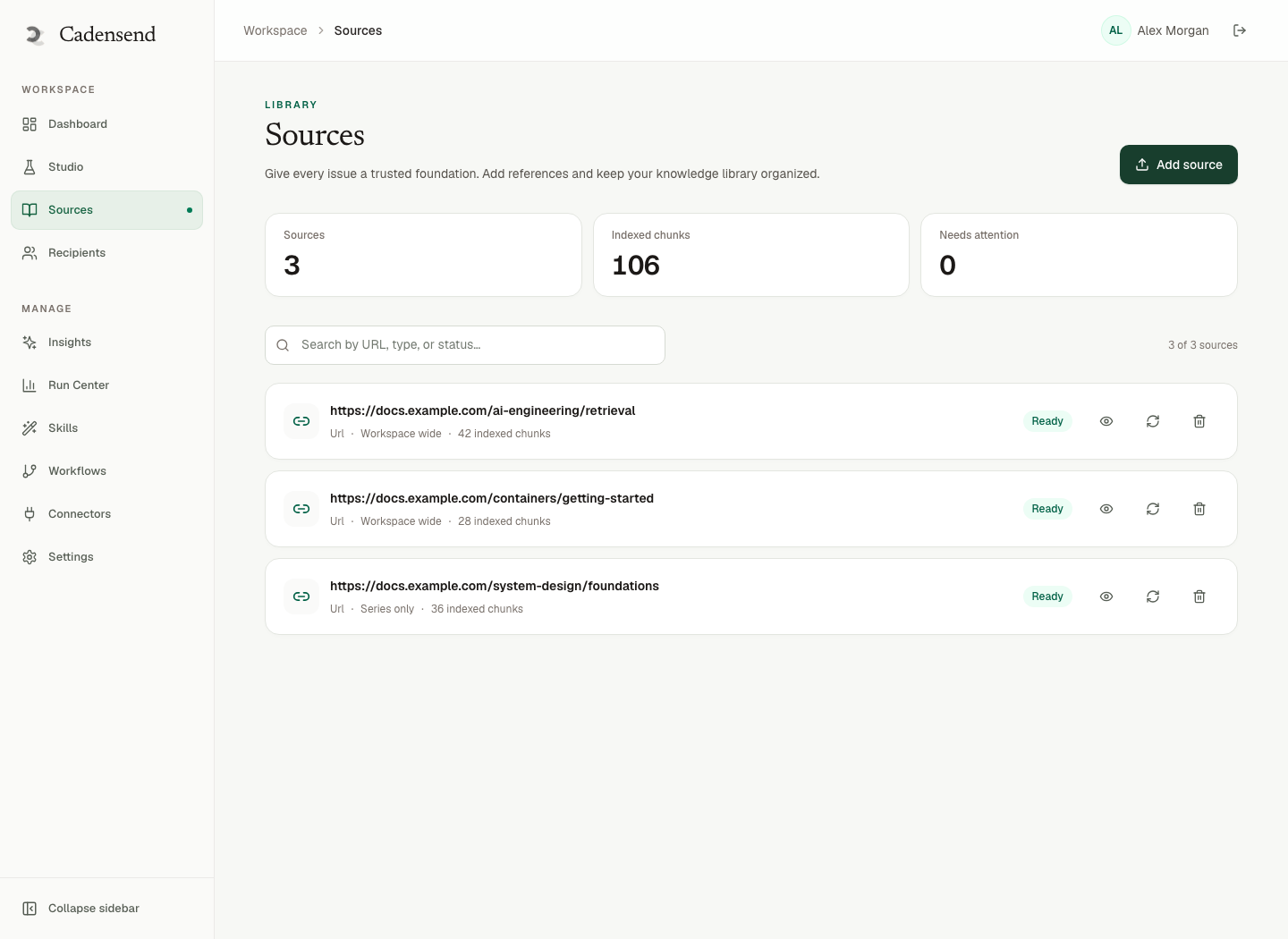
Figure 1: Educational issues pull from a source library. Transactional templates should not.
Retries and Exactly-Once
Short answer: Both types need idempotency. The keys and the user harm differ.
Duplicate reset emails are confusing. Duplicate charges in email form (“here is your receipt” ×2) look like double billing. Duplicate lessons look like a spam cannon and wreck deliverability.
Cadensend keys delivery on workspace, issue, recipient, version, and writes the row before the provider call (idempotent sends explained; full systems treatment: idempotency in distributed systems). Payment systems key on payment intent. Do not reuse the lesson unique index for checkouts.
At scale, the same Postgres SKIP LOCKED pattern shows up in system design for 10 million users. Cadensend applies it early, on one inbox, so the protocol is not bolted on when Update 2 adds audiences.
Self-hosting (laptop course) makes sleep/wake retries common. Transactional workers in Kubernetes make deploy retries common. Same bug class.
Choosing Rails Without Lying
Short answer: Use a transactional provider API for events. Use a curriculum engine for series. Use an ESP for lists. Do not force one product to lie about its job.
Pick:
- Transactional provider + your app for resets, receipts, webhooks.
- Cadensend for a grounded series from your notes, self-hosted, MIT, verified address in MVP.
- Kit / Ghost for audiences, memberships, and posts you authored.
You can compose: generate a grounded issue in Cadensend, human-review, later paste a public version into Ghost. You cannot ask Cadensend to be Stripe email. You should not ask Kit to refuse invented DOIs.
If your “course” is actually onboarding drips with product screenshots and no sources, you might still want an ESP sequence — and you should still not hallucinate. Grounding is a writing ethic even when the rail is Kit.
Need both retrieval and send semantics designed together? Contact HinterBuild. Lead: LinkedIn.
Worked Example: Onboarding That Is Both
Short answer: Split the first hour (transactional) from the first two weeks (educational). Do not merge templates.
A product signup often needs:
- Immediately: verify-email link. Transactional. Short. No citations. Idempotency key =
verify_tokenoruser_id + verify_wave. Domain:mail.example.comorauth.example.com. - Immediately: receipt if they paid. Transactional. Key =
order_id. Same or sibling subdomain. Still not Cadensend. - Day 0 optional: “you are in” with a link to the syllabus home. Borderline. If it is operational (“here is how to open issue 1”), keep it transactional. If it is issue 1 of a grounded series, it belongs in Cadensend and should wait for the series clock.
- Days 1–14: issues 1–N from sources you attached. Educational. Keys = issue versions. Zone = learner IANA. Cadensend or an honest ESP sequence you wrote.
The failure we see: a startup puts all four through Kit because “we already pay for contacts.” Then a password reset inherits newsletter headers, tracking pixels, and a “you’re receiving this because you subscribed” footer that is false. Filters and humans both notice. The reset lands in spam; users cannot log in; support volume explodes. That is not a curriculum problem. It is a taxonomy problem.
The second failure: they generate “onboarding lessons” in ChatGPT, paste into Kit, and cite papers nobody attached. Issue 2 teaches a fake API. That is hallucination riding an ESP. Cadensend would have refused the footnote at render time if the RFC was not in the library — or would have cited the real RFC if it was.
The third failure: they use Cadensend as a receipt printer “until Update 2.” That is out of scope. Receipts need payment-provider templates and PCI-adjacent caution, not Plan Studio.
A clean architecture diagram in words:
- App events → transactional mailer (your backend, idempotency on event ids).
- Learning goals → Cadensend series (sources, plan, grounded issues, idempotent sends on issue keys).
- Public essays → Ghost.
- Marketing drips → Kit, with consent.
HinterBuild will happily wire the first two for a team that already has a corpus (RAG/LLM). We will not pretend one SMTP user is all four jobs. CAN-SPAM and Google’s bulk sender rules get easier when commercial bulk is isolated from “reset this password.”
If issue 1 of the course is “how email authentication works,” attach the RFCs and your DNS runbook, then let Cadensend cite those — do not mix in last week’s invoice HTML as a “source.” Series scope exists so finance PDFs cannot leak into the syllabus (garbage RAG).
Frequently Asked Questions
Is a welcome course transactional or educational?
If it fires once after signup and is operational (“here is how to log in”), treat it as transactional. If it is a multi-issue syllabus with learning objectives, treat it as educational — even if a purchase triggered enrollment.
Can Cadensend send password resets?
No. It is not a transactional bus. Use your auth provider. Cadensend delivers curriculum issues.
Does educational email need unsubscribe in MVP Cadensend?
MVP sends to your verified address only. When audiences exist, unsubscribe and suppression are required product work, not a footer graphic.
Why not send lessons through the same template as receipts?
Different length, citations, cadence, and complaint profiles. Shared templates train filters to treat your receipts like newsletters.
Is Ghost “educational email”?
Ghost sends posts you wrote to members. That can teach. It does not plan a curriculum or ground generation in a scoped corpus. See the comparison post.
Do I still authenticate DNS for mail I send myself?
Yes, once a provider or SMTP relay is involved. Authentication is not only for bulk. See avoid spam filters.
How does PKM fit?
PKM is the source corpus. Educational email is the sequenced delivery rail. Cadensend is the engine between them. ChatGPT Projects can sit beside PKM as a studio, not as SMTP.
Conclusion
- Transactional vs educational email is trigger and contract, not which ESP logo you pasted.
- Cadensend is educational: sources, citations, plan, exactly-once issues — not receipts.
- Lists need consent products. MVP Cadensend is you, on purpose.
- Idempotency keys must match the object: order vs issue version.
- Grounding belongs in lessons; determinism belongs in OTPs.
Start with Cadensend on GitHub, or contact HinterBuild. Context: /about. LinkedIn: Abdul Sami.
Free consultation
Book a free consultation call on transactional vs educational email
30-minute call with the HinterBuild team. Discuss your project, architecture questions, or next steps — no obligation.
Book a meeting
Keep reading
Related articles
Avoid Spam Filters for Educational Email
Avoid spam filters for educational email with authentication, honest copy, and exactly-once sends—not blast-list warm-up folklore.
Read post
Write a 7-Day Email Onboarding Course
Write a 7-day email onboarding course with objectives, sources, and exactly-once delivery — without treating a curriculum engine like a CRM.
Read post
Turn PDF Notes Into an Email Course
Turn PDF notes into an email course: ingest documents, plan modules, ground every claim, and schedule issues with real citations.
Read post
Teach With Sources, Not AI Vibes in Email
Teach with sources, not AI vibes: ground every educational email in files you supply, with citations the model cannot fabricate.
Read post